
ProductPipeline
Sales pipeline where each deal is a place
PropelMapper's pipeline moves farms from lead to client the way a sales team expects, except every card is a real place on the map, with its visits, its people and its last conversation one click away.

Sales visits to farms
A rep selling to livestock operations does not sell to a company in an office park. They sell to a hog site at the end of a gravel road, a cattle operation a couple of counties over, a family with several barns and one decision maker.
Generic CRMs treat that as an address field. We think the place should be the record. When the deal is the dairy, the pipeline card should open on the dairy: its barns, the last herd visit, the photo of the feed bunk, the owner and the son who now makes the calls.
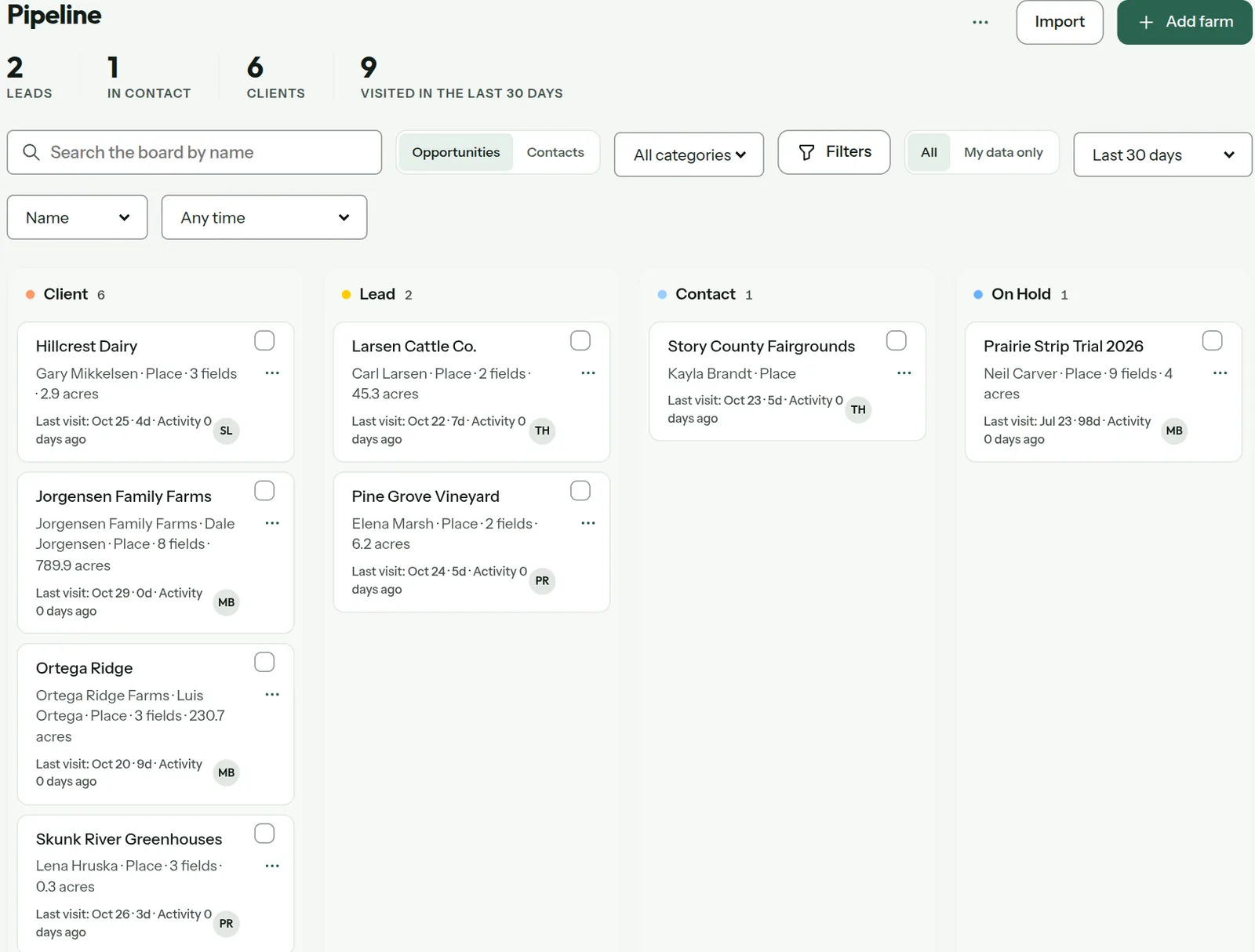
So in PropelMapper the pipeline is made of places. Every farm sits in a stage your team defines, from lead to in contact to client, and moving it to the next stage is a drag.
Pipeline note: what you said and what the report says
A rep's note after a first visit to a dairy that is not a customer yet.
“First visit at Hillcrest. Gary's happy with his current supplier but the fresh pen numbers aren't great. Leave him as in contact, I'll bring a ration comparison next month.”
Pipeline note - Hillcrest Dairy
At a glance
First visit. Owner satisfied with current supplier; fresh pen performance is a concern. Stage: in contact. Next step: bring a ration comparison next month.
Observations
First visit. Owner satisfied with current supplier; fresh pen performance is a concern. Stage: in contact. Next step: bring a ration comparison next month.
After your review
Example account: Prairie Agronomy
Pipeline counts by period
The strip at the top counts leads, farms in contact, clients, and how many were visited recently. Pick the period: the last week, the last month or longer. Conversion is counted when a farm reaches your first status named Client or Customer, so the definition is yours and it stays the same all season.
Filter for the leads nobody has touched in a month or the ones never visited. Those two lists are usually the week's work.
Selling to places or contacts
Switch the pipeline between places and contacts. Some teams sell to a farm, some sell to a person who runs three of them. Add a farm or a contact from the same page, or import a list to start, and every new place lands in the team's default stage.
How Pipeline and Board relate
Board and Pipeline show the same farms. Pipeline is the sales entry, with the import and add buttons and the conversion numbers. Board is the operations view, often grouped by category instead of status. Use the one that matches the job you are doing that morning; nothing needs to be kept in sync.
Moving deals forward after visits
The pipeline moves because of visits, so the two sit together. Finish a call at the dairy, say the next step in your voice note, and it comes back as a task on that place for you to confirm. Open the card and the visit, the task and the stage are on the same page.
When you drag the card forward, the farm's history records who moved it and when, so a manager can see how a deal progressed without asking. A slip of the mouse is one Undo away. Select several cards to move a whole group after a field day where you met a handful of prospects at once.
Questions about the pipeline
Does the pipeline track deal values?
The pipeline tracks places and their stage, owner and activity. Accounts group the people and places of one operation. See the accounts page for how they fit together.
Who it’s for
Livestock nutrition and genetics sales teams, seed and crop protection reps, and vet practices growing a client list, anywhere the customer is a farm and the sales call is a visit.