
ProductOpportunities and accounts
Accounts and sales opportunities tied to places
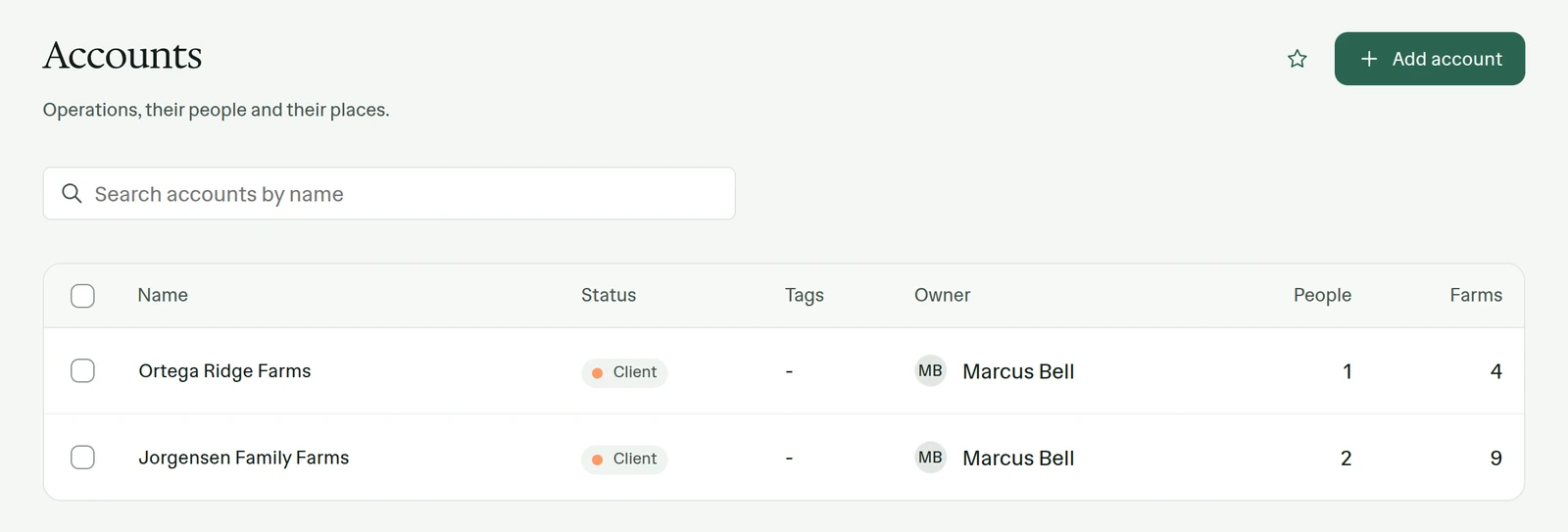
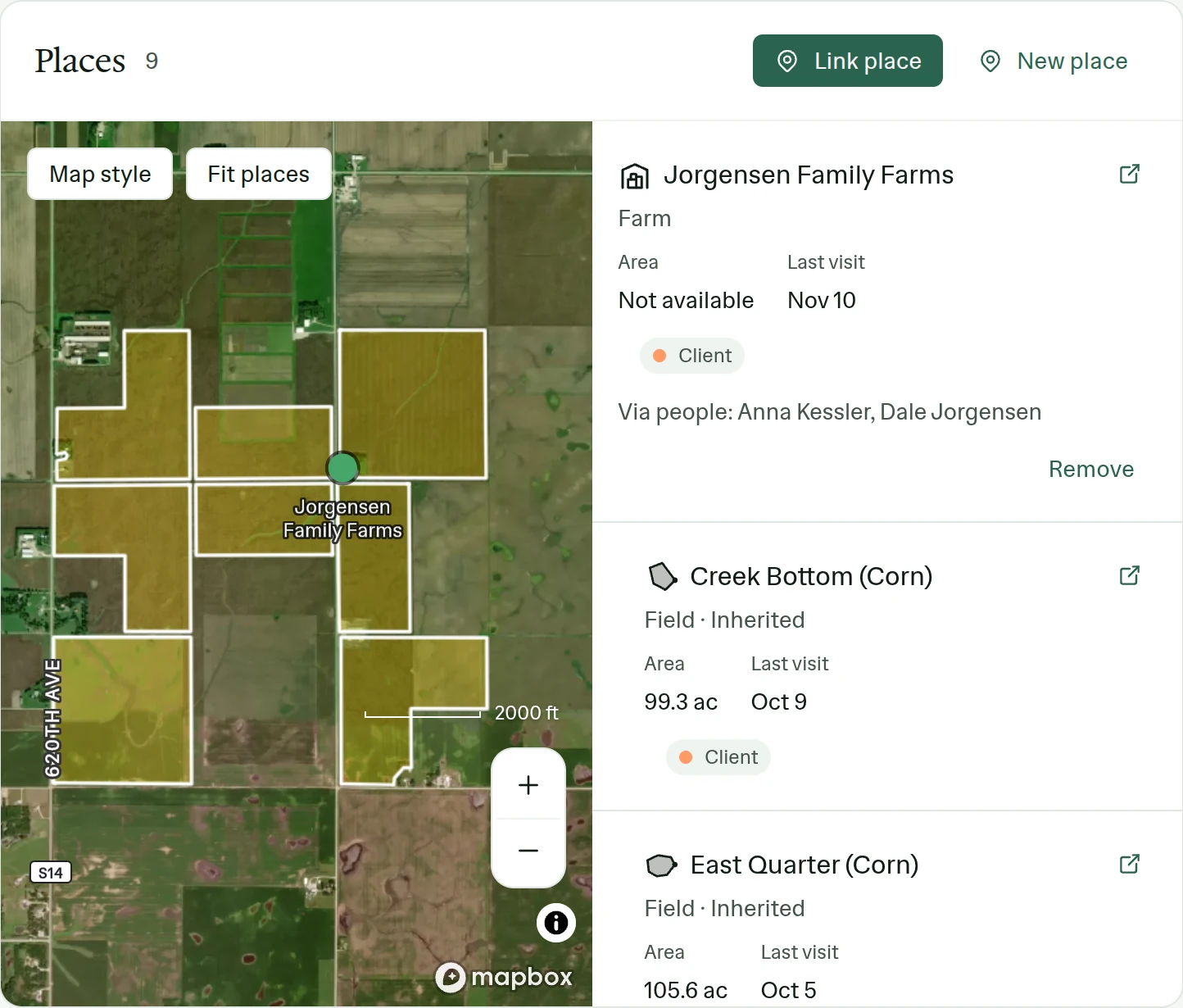
PropelMapper accounts group an operation's people and all of its places, and each place carries its own stage in the pipeline, so a family business with several sites reads as a single customer without losing what is happening at each one.

Why sales records belong to places
Rachel C. at Atmosphere Global described the old way plainly: it was contact by contact. A farming family is rarely one contact. There is the father who signs, the daughter who runs the books, the herd manager who actually talks to the rep, and maybe three sites with different needs. Spread across separate contact records, nobody sees the whole customer.
An account fixes that. It groups the people of one operation, each with their role, and every place the operation owns or runs. Open it and you see recent activity across all of them, the stage each place is in, and who on your team owns the relationship.
We think the place still has to be the unit of work, though. The dairy might be a client while the heifer site down the road is still a lead. So the account spans sites, and each site is its own opportunity, moving through the pipeline at its own pace.
Family dairy: what you said and what the report says
A rep's note after meeting the family behind a two-site dairy account.
“Met the whole family today. Dad still signs, but the daughter does the books and wants the numbers by email. Home dairy is a client, the heifer site is still a lead, we'll quote it next month.”
Family dairy - Account
At a glance
People: owner (signs), daughter (bookkeeping, prefers email), herd manager.
Home dairy: client. Heifer site: lead; quote planned for next month.
Observations
People: owner (signs), daughter (bookkeeping, prefers email), herd manager.
Home dairy: client. Heifer site: lead; quote planned for next month.
After your review
Example account: Prairie Agronomy
What an account page holds
People, with their role in the operation: owner, partner, herd manager, bookkeeper. Places, linked from the ones you already have or created right there. Recent activity, whether it was a call, an email, a meeting or a note. The stages of every linked place in one list. An owner on your side, and tags for however your team slices customers.
Start a visit from the account and pick the site. The visit, its report and any task it creates land on that place, and show up on the account with everything else.
Opportunities on a contact
Open a contact and the Opportunities tab lists every place linked to them with its stage and owner. That is the list a rep wants before a call: which of this person's sites are already customers, which are in progress, which are still a lead. Open in Board takes you to the same cards on the pipeline, filtered to that contact.
Accounts, contacts, places and opportunities
Account: one operation. Contacts: the people in it. Places: the farms, barns, ranges or sites it owns or runs. Opportunity: one of those places, at a stage in your pipeline. Visits and reports always belong to a place, and show up on the account and the contacts above it.
If your work is not farms, the words change with your hierarchy settings. A pest control company might sell to a property management account with twelve buildings; each building is a place and its own opportunity.
In the app
Example account: Prairie Agronomy
“It just helps my dad be able to see everything in a very broad overview on an account. We couldn't do that. It was contact by contact, which was really frustrating. This is much, much better.”
 Rachel C.Atmosphere Global
Questions about opportunities and accounts
Does every contact need an account?
No. A grower with a single farm can stay a contact linked to that place. Accounts earn their keep when one operation has several people or several sites.
Who it’s for
Livestock nutrition, genetics and seed sales teams selling to family operations with several sites, vet practices with multi-site clients, and land companies managing owners with several farms.