

ProductAsk Propel
Search your team’s earlier field visit notes
Ask Propel, the question box in PropelMapper, finds an earlier note or reading in the team information you can access, with sources you can open before using the answer.

Finding another advisor’s visit notes
The grower asks what Sarah saw at Creek Bottom. You were at another farm that day. You ask which observations were recorded at that field and follow the answer’s links to the original visit.
You read the note about lower-leaf yellowing on the east edge and check its date before returning the call. The answer helps you locate the note, and the recording and photos let you hear and see what Sarah recorded.
You can ask in the browser or type or dictate a question on the phone. Ask needs a connection and searches the team information you have access to. A note still waiting on someone’s offline phone must upload before it can be found.
When you prepare the next report, you distinguish the earlier observation from what you saw today. You add the professional explanation and read the finished report before sending it.
East edge: what you said and what the report says
“Creek Bottom, east edge. Lower leaves are yellow here. I saved a photo at this stop so we can look back at it before the next visit.”
East edge - Creek Bottom
At a glance
Lower-leaf yellowing was observed on the east edge. A photo was saved at the stop.
This observation describes the visit when the note was made.
Observations
Lower-leaf yellowing was observed on the east edge. A photo was saved at the stop.
This observation describes the visit when the note was made.
After your review
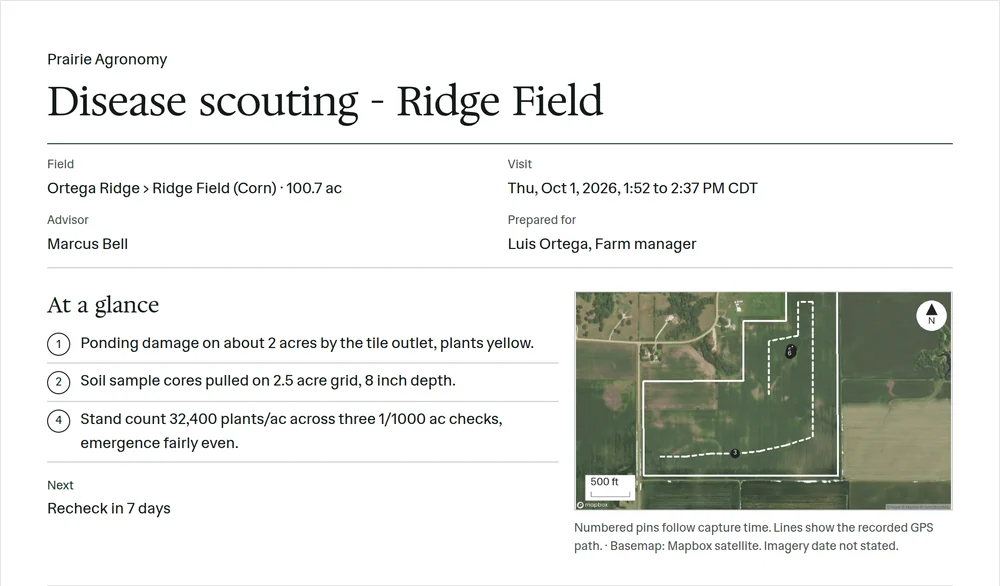
Example account: Prairie Agronomy
Asking about a specific field and visit
A useful question names the place and the period you want to understand. If the grower asks about yellow plants discussed last week, include the field name and that timing. A broad question about a client with several farms can lead you to records that are relevant to the account but not to the stop the grower means.
Ask helps you find information in the team records you can access. Open the linked source and read it before relying on the answer. Check the visit date, the advisor who made the note and whether the statement describes an observation, a client’s comment or a recommendation that was added during review.
The distinction matters when the first impression changed after receiving results. An early note can explain why a sample was taken, while a later report contains the advice that was sent. Follow the record far enough to understand which version of the finding the grower received.
If you cannot locate the expected detail, check whether the visit has uploaded. A recording still saved offline on another phone is not yet part of the information available to search. A missing answer may mean the relevant record is absent. Ask the advisor who made the visit or inspect the source visit before concluding that no problem was observed.
Using earlier records on the next farm visit
Before returning to the field, use the earlier note to identify what needs another look. Open the photo and location if you plan to revisit the same stop. The record can remind you what the client asked, which samples were pending and what your team promised to do next.
Make a new record of today’s conditions. An earlier photo remains evidence of the earlier visit, even when it still looks relevant to the current question. In the new report, distinguish what Sarah found then from what you inspected now. That gives the grower a clear account of the sequence.
We help locate records and draft the report from uploaded observations. You check the sources, explain the finding and add professional advice. Ask does not turn an earlier note into a diagnosis or a new field inspection. The value is being able to find and read the team’s recorded work before the next conversation with the client.
In the app
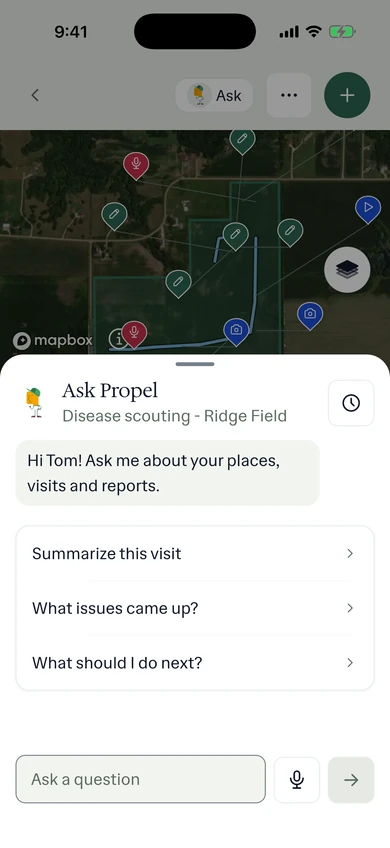
Example account: Prairie Agronomy
 Ask Propel Prairie Agronomy · example records
What did Sarah record at Creek Bottom on October 11?
The recorded corn stage was R5. The visit notes mention lower-leaf yellowing on the east edge and gray leaf spot near the waterway. The original note is available to check those observations.
Example account: Prairie Agronomy
Ask Propel Prairie Agronomy · example records What did Sarah see at Creek Bottom on the last visit?
On October 11 at Jorgensen Family Farms, Creek Bottom (Corn) was at R5 with a good stand. She noted foliar issues on the east edge and near the waterway.
Example account: Prairie Agronomy
Ask Propel Prairie Agronomy · example records What does the Creek Bottom stand-count note tell me?
The October 11 note records about 32,000 plants per acre and calls the stand good. This one note does not establish a change across visits. A trend needs another dated sample for comparison.
Example account: Prairie Agronomy
Who it’s for
An advisor covering another advisor’s farm can ask about the earlier farm notes before calling the grower. You open the source and decide what that earlier observation means for today’s work.